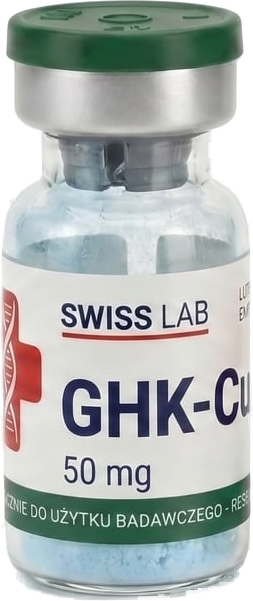
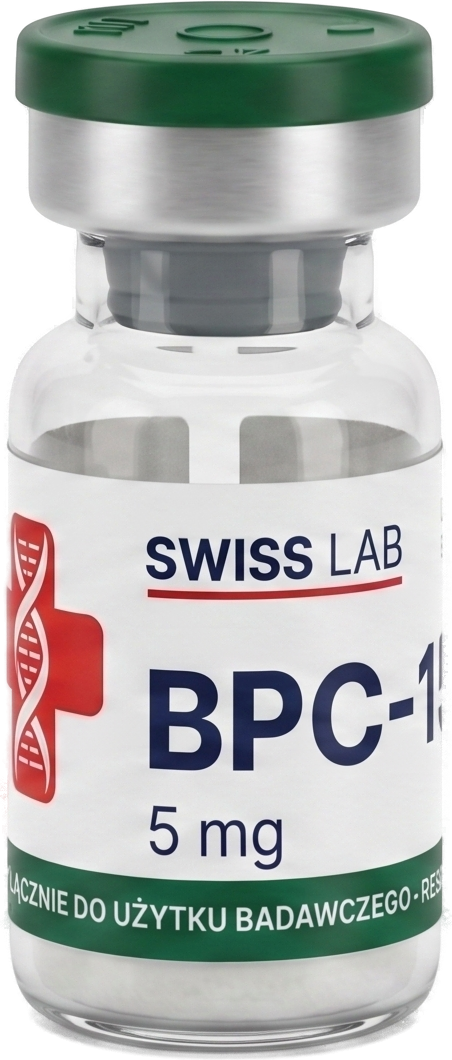
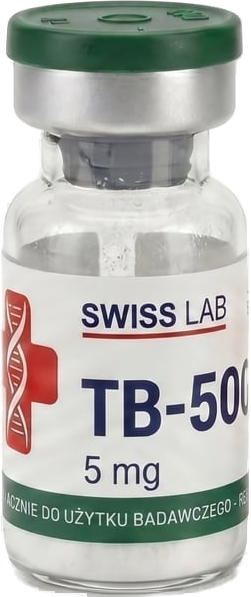
KLOW is the GLOW blend — the copper tripeptide GHK-Cu, BPC-157 and TB-500 — with a fourth peptide added: KPV, the last three amino acids of the hormone alpha-MSH, studied as an anti-inflammatory component “without the tan”. The promise is simple: everything GLOW is supposed to give, plus damping of inflammation, “support for problem skin” and a “gut component”. This review checks how much of that is backed by the literature. The short answer: KPV has interesting data from cells, mice, rats and rabbits, but not a single human study; the other three components are described separately; and nobody has studied the four-peptide blend — even two of them together have been tested only once, in rats, with no additive effect.
What KLOW is
A typical vial of KLOW contains 50 mg of GHK-Cu and 10 mg each of BPC-157, TB-500 and KPV. It differs from GLOW only by KPV, which makes up about one eighth of the blend's mass; more than 60% of the mass is still GHK-Cu, and therefore copper too. KPV (lysine–proline–valine) is the tail end of the natural hormone alpha-MSH: a fragment that in studies retains the anti-inflammatory action of the whole hormone but does not stimulate pigment production in the skin (Böhm and Luger, 2019). It is not an approved medicine in any country and — unlike BPC-157 or TB-500 — does not even have a registered clinical trial. The other three components are not medicines either, and BPC-157 and TB-500 are banned in sport (Mavrych et al., 2026).
What is known about the components — in brief
The trio of GHK-Cu, BPC-157 and TB-500 — their mechanisms, the single human study with a GHK-Cu wound gel and the matter of copper — is discussed in the article on the GLOW blend; each component also has its own text: GHK-Cu, BPC-157 and TB-500. The shared conclusion: all three stimulate vessel formation and remodelling of the tissue “scaffold”, so they largely act on the same processes. KPV is covered in detail in the article KPV (Lys-Pro-Val) — the anti-inflammatory tripeptide; here we focus on what KPV brings — or might bring — to the set.
What KPV adds to the set — anti-inflammatory action without the tan
Alpha-MSH, the parent hormone of KPV, acts on the skin in two ways: it darkens it and at the same time suppresses inflammation. Böhm and Luger (2019) from the University of Münster point out that most skin cell types carry the MC1R receptor for alpha-MSH, through which the hormone dampens inflammation, protects cells and influences collagen turnover — and that truncated peptides such as KPV “possess anti-inflammatory effects but lack the pigment-inducing activity of alpha-MSH”. On that basis the authors propose KPV as a “promising future candidate” for the treatment of skin wounds and ulcers; they list the available data from computer models, the test tube, tissues and animal models and honestly discuss the arguments for and against. That is precisely the source of the “problem skin” slogan: a research proposal from 2019, not the result of a human study. At the cellular level KPV inhibits the “master switch” of inflammation, the protein NF-κB, already at nanomolar concentrations (Dalmasso et al., 2008).
KPV in healing — animal data
What is most interesting for the blend is that KPV has been studied not only as an anti-inflammatory agent but also as a healing factor. Bonfiglio et al. (2006) scraped the corneal epithelium off rabbits' eyes and gave KPV as drops: after 60 hours all eight KPV-treated corneas were fully covered with new epithelium, while none of the control corneas was; the effect vanished when the production of nitric oxide was blocked. Nitric oxide is the same molecule through which — as we describe in the BPC-157 article — BPC-157 acts on vessels; the two peptides may therefore touch one pathway, although nobody has checked what follows when they are given together. Shao et al. (2021) put KPV into a gel that adheres to the mucous membrane and applied it to rats with oral mucositis after chemotherapy: the KPV gel improved tissue repair, lowered the inflammatory cytokines IL-1β and TNF-α, raised the anti-inflammatory IL-10 and inhibited Staphylococcus aureus, including the resistant MRSA strain. The review of tripeptides in wound healing covering 2016–2025 (Adnan et al., 2025) sums up: GHK formulations “enhance fibroblast migration, ECM remodeling, collagen and elastin synthesis”, while KPV-loaded hydrogels “reduce inflammation, promote tissue regeneration, and combat MRSA infections”. The same review assigns the two tripeptides to different stages of healing: GHK-Cu “promotes fibroblast proliferation, collagen synthesis, angiogenesis, and ECM remodeling”, whereas KPV “exerts anti-inflammatory effects and supports tissue repair”. That is the best available argument that KPV and GHK-Cu could complement each other — but it is a juxtaposition of separate papers about separate compounds; none of the studies discussed in the review gave them together.
The “gut component” — what was actually shown
The best-documented effect of KPV concerns the gut, but it is worth reading carefully how it was obtained. In the work of Dalmasso et al. (2008) KPV was given to mice orally, in their drinking water, and in two different models of colitis it reduced the incidence of inflammation and the amount of pro-inflammatory cytokines. The key was the transporter PepT1 — a “gate” in the membrane of gut cells that pulls short peptides out of food and which becomes more abundant in the inflamed colon; that is how KPV entered the cells. In other words: the “gut” data come from KPV given alone, by the digestive route, to mice. There is no study in which KPV given together with GHK-Cu, BPC-157 and TB-500 — in any form — affected the gut, nor any data on how the presence of three other peptides changes its fate in the body. The blend's “gut component” is thus an inference from a mechanism, not a result.
What is not known about the blend — and how we looked
A PubMed query for KPV (also as “Lys-Pro-Val” and “alpha-MSH(11-13)”) combined with GHK-Cu, BPC-157, TB-500 or thymosin beta-4 returns exactly one hit — the tripeptide review mentioned above, which discusses GHK and KPV separately. The name KLOW leads in PubMed only to unrelated papers (the abbreviation occurs with other meanings). The ClinicalTrials.gov registry contains not a single trial with KPV as an intervention, and queries for KLOW and for pairs of the components return zero results. The only study combining any two components of KLOW — BPC-157 with TB-500 on the rat Achilles tendon (Biçer et al., 2026) — found that the pair “did not confer additional benefits compared to either agent alone”. The review by Mavrych et al. (2026) calls “combination therapy effects” one of the main gaps in knowledge about these peptides and warns of “unexpected interactions or cumulative toxicities”. Nothing, then, is known about KLOW as a whole — neither whether the four peptides work better together than apart, nor whether they get in each other's way.
Safety and the limits of the evidence
Four substances mean four sets of unknowns. For KPV there are no human safety data whatsoever — it is not even known how long it persists in the body or whether it is safe with longer use. For GHK-Cu, BPC-157 and TB-500 the review in Sports Medicine (Mendias and Awan, 2026) states that “rigorous human safety data are scarce, and there is potential for serious harm”. Then there is copper, of which a KLOW vial contains as much as GLOW — more than the safe daily intake from food — and the theoretical questions specific to this combination: KPV inhibits NF-κB, a mechanism also needed for defence against infection, while the other three components stimulate vessels; how these actions combine in one organism has not been checked. It is worth remembering the placebo effect, which — as Mendias and Awan write — social media amplify, and with skin problems that wax and wane a perceived improvement proves nothing. We deliberately give no methods of use and no doses.
The wider context — tripeptides and blends
KLOW contains two tripeptides — GHK-Cu and KPV — a class that has been attracting wound-healing researchers in recent years: three amino acids are cheap to produce and easy to place in hydrogels or nanoparticles, and the review by Adnan et al. (2025) points out that the future of these compounds lies in improving their stability, bioavailability and delivery systems. That is quite a different direction from mixing several peptides in one vial. The other blends in our encyclopaedia are described in the articles on “Wolverine” (BPC-157 + TB-500) and on GLOW; all three share the same state of knowledge: the components have a literature, the blends do not.
Summary
KLOW is GLOW plus KPV. KPV brings to the set an anti-inflammatory action documented in cells and animals (gut, cornea, oral mucosa, mouse skin), without any effect on skin pigment — but without a single human study; the slogans about “problem skin” and a “gut component” are inferences from mechanisms, not measured effects of the blend. Nobody has studied the four components together, and the only test of two of them showed no additive effect. The KLOW blend supplied by SWISS LAB is a reagent intended for research use only.
Sources
- Adnan SB, Maarof M, Fauzi MB, Fadilah NIM. Exploring the Role of Tripeptides in Wound Healing and Skin Regeneration: A Comprehensive Review. International Journal of Medical Sciences. 2025;22(16):4175–4200. PMID: 41209547. DOI: 10.7150/ijms.118118. pubmed.ncbi.nlm.nih.gov/41209547
- Böhm M, Luger T. Are melanocortin peptides future therapeutics for cutaneous wound healing?. Experimental Dermatology. 2019;28(3):219–224. PMID: 30661264. DOI: 10.1111/exd.13887. pubmed.ncbi.nlm.nih.gov/30661264
- Mavrych V, Shypilova I, Bolgova O. Therapeutic peptides in gerontology: mechanisms and applications for healthy aging. Frontiers in Aging. 2026;7:1790247. PMID: 42021992. DOI: 10.3389/fragi.2026.1790247. pubmed.ncbi.nlm.nih.gov/42021992
- Mendias CL, Awan TM. Safety and Efficacy of Approved and Unapproved Peptide Therapies for Musculoskeletal Injuries and Athletic Performance. Sports Medicine. 2026;56(8):1921–1935. PMID: 41966639. DOI: 10.1007/s40279-026-02437-0. pubmed.ncbi.nlm.nih.gov/41966639
- Biçer O, Adanir O, Güleryüz Y, et al. Effects of BPC-157 and TB-500 on Achilles tendon healing in rats: A histopathological and biomechanical study. Joint Diseases and Related Surgery. 2026;37(3):822–837. PMID: 42542926. DOI: 10.52312/jdrs.2026.2951. pubmed.ncbi.nlm.nih.gov/42542926
- Dalmasso G, Charrier-Hisamuddin L, Nguyen HT, Yan Y, Sitaraman S, Merlin D. PepT1-mediated tripeptide KPV uptake reduces intestinal inflammation. Gastroenterology. 2008;134(1):166–178. PMID: 18061177. DOI: 10.1053/j.gastro.2007.10.026. pubmed.ncbi.nlm.nih.gov/18061177
- Bonfiglio V, Camillieri G, Avitabile T, Leggio GM, Drago F. Effects of the COOH-terminal tripeptide alpha-MSH(11-13) on corneal epithelial wound healing: role of nitric oxide. Experimental Eye Research. 2006;83(6):1366–1372. PMID: 16965771. DOI: 10.1016/j.exer.2006.07.014. pubmed.ncbi.nlm.nih.gov/16965771
- Shao W, Chen R, Lin G, et al. In situ mucoadhesive hydrogel capturing tripeptide KPV: the anti-inflammatory, antibacterial and repairing effect on chemotherapy-induced oral mucositis. Biomaterials Science. 2021;10(1):227–242. PMID: 34846053. DOI: 10.1039/d1bm01466h. pubmed.ncbi.nlm.nih.gov/34846053
For in-vitro laboratory research only. It is not a human medicine and is not for treatment.