
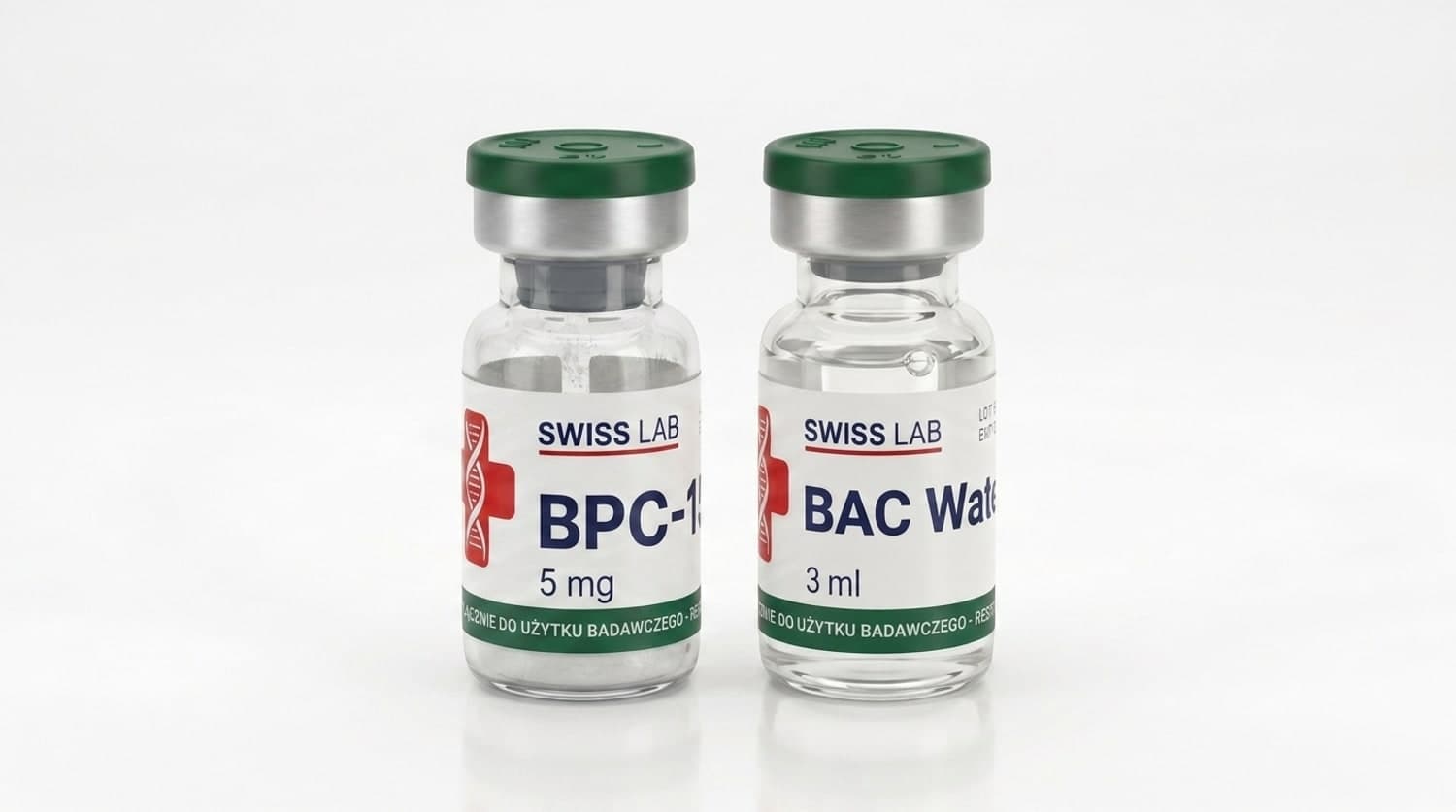
What BPC-157 is
BPC-157 is a peptide — a short chain of amino acids, the molecules proteins are built from. It has fifteen of them. Its sequence was discovered inside a larger, naturally occurring protective protein found in human gastric juice.
It is made synthetically in the laboratory. Its distinguishing feature is that it tolerates an acidic environment well and does not break down as quickly as many other peptides. Researchers have been studying it since the 1990s.
We have collected more in the article BPC-157 — what the research says. An independent review is also available here: review of BPC-157 research (PubMed).
How it works (in short)
In studies, BPC-157 acts mainly on the formation of new blood vessels. That makes it easier for blood — and with it oxygen and the material needed for repair — to reach an injured site.
In animal and cell studies the peptide also stimulated repair cells and growth factors that help rebuild damaged tissue. A possible effect on the gut-brain connection has been reported as well.
The blood-vessel detail is described here: BPC-157 and blood vessels (PMC) and a second pathway (PMC).
What is being studied
Research focuses mainly on the regeneration of tissue that heals poorly — tendons, ligaments and muscle. A separate area is protection of the stomach and intestinal lining, plus effects on bone and nerve tissue.
An important caveat: the overwhelming majority of the data comes from animal and cell studies, not from humans. Human trials are very scarce. BPC-157 is therefore a promising research direction, but it is not an established treatment.
Example studies: muscle and tendon healing (PubMed) and effects on tendon cells (PMC).
For in-vitro laboratory research only. Not for human or animal consumption and not for treatment.