
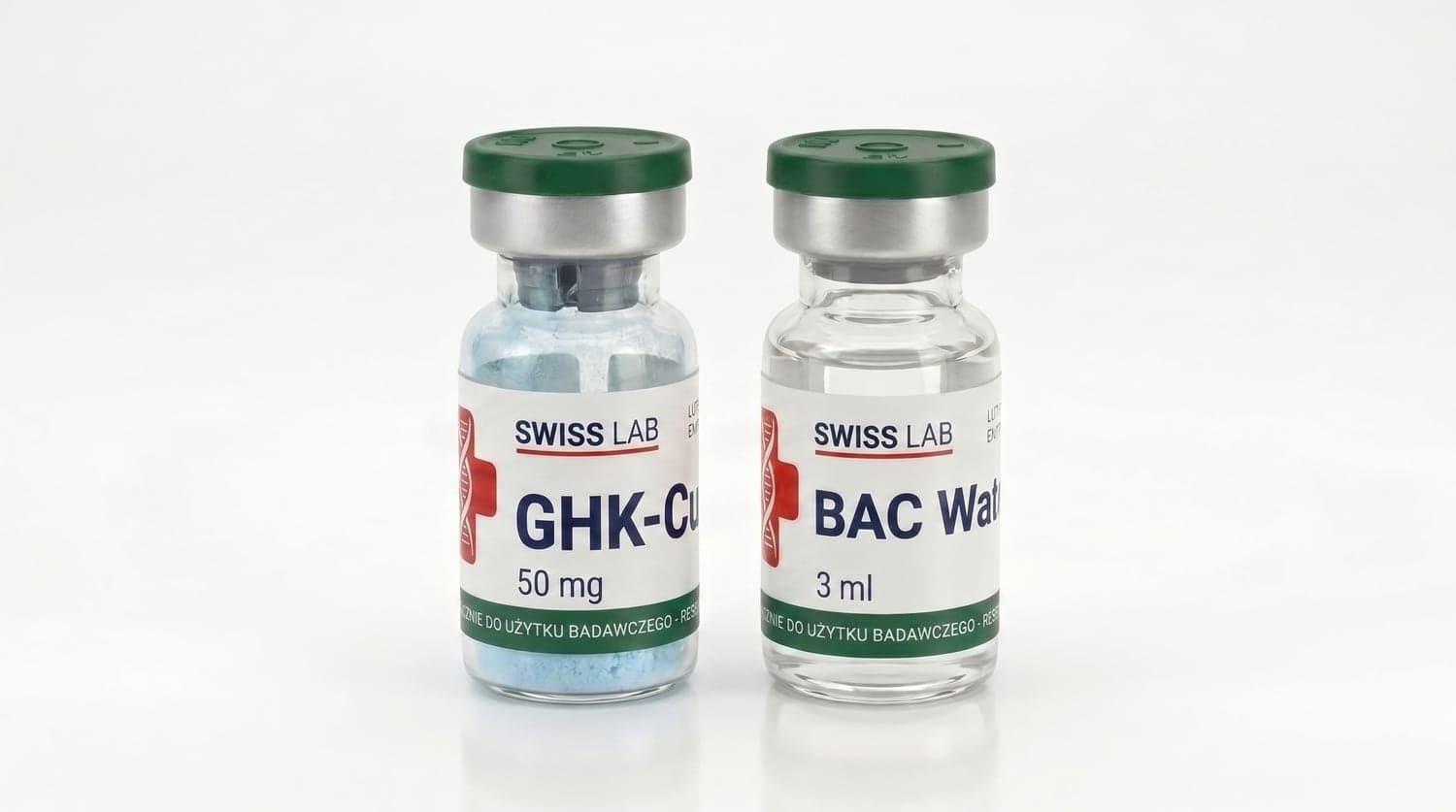
WHAT GHK-Cu IS
GHK-Cu is a short peptide (a peptide is a short chain of amino acids, the molecules that make up proteins) bound to a copper atom. The GHK peptide itself was discovered in human blood in 1973.
The peptide occurs naturally in the body, including in blood and saliva. Its level falls with age — roughly at the point where tissue starts regenerating less well. Researchers therefore regard it as a natural signal for repairing damaged tissue. Bound to copper, it also helps deliver that element into cells.
The discovery and properties of the peptide are described here: regenerative and protective action of GHK-Cu (PMC).
How it works (in short)
In studies GHK-Cu changes which genes are active in a cell. It shifts their activity towards the pattern typical of younger, healthier tissue, among other things by activating genes responsible for repairing damage inside the cell. This is described here: GHK and DNA-repair genes (PMC).
The peptide also supports tissue remodelling: it stimulates the formation of collagen and elastin (the proteins that give skin firmness and elasticity) while helping clear damaged proteins. It also promotes the formation of new blood vessels.
A third thread is anti-inflammatory action and protection of cells against damage. A review covers this in more depth: copper peptides and skin regeneration (MDPI).
What is being studied
The best-studied area is wound healing and skin regeneration. The peptide has been examined for faster wound closure, improved scar appearance and stimulation of collagen production, as well as effects on skin hydration and elasticity. These are research findings, not approved treatments.
A second direction is the nervous system. Studies suggest GHK may influence genes linked to nerve-cell function and memory. More here: GHK and the nervous system (PMC).
The peptide is also studied for protecting tissue against damage. All of these applications remain at the laboratory-research stage. A summary is in the review cited above: review of GHK-Cu research (PMC).
For in-vitro laboratory research only. Not for human or animal consumption and not for treatment.