
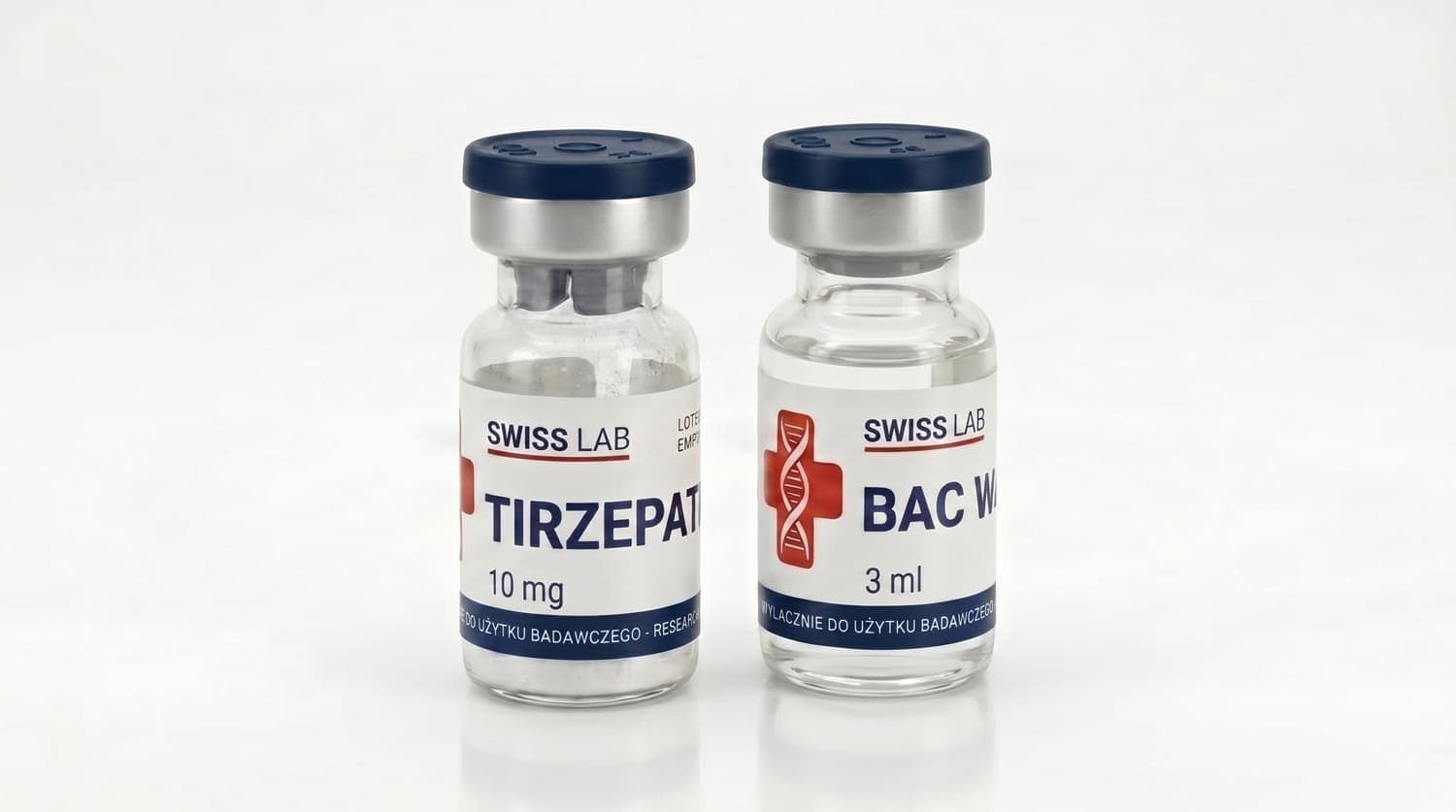
What tirzepatide is
Tirzepatide is a peptide — a short chain of amino acids (amino acids are the building blocks of proteins). It is produced synthetically in the laboratory.
Its molecule mimics two natural gut hormones at the same time, abbreviated GIP and GLP-1. These hormones help the body manage sugar after a meal. Tirzepatide presses both of those switches at once — which is what sets it apart from older compounds that moved only one of them. A detailed account of its action is in the paper on the dual GIP and GLP-1 agonist (PMC).
How it works (in short)
An agonist is a molecule that presses the same switch in the body as the natural hormone. Tirzepatide presses two of them: GIP and GLP-1. In studies on pancreatic cells this helps release insulin when sugar is high — the way the body does it itself.
Researchers also noticed that tirzepatide activates the GLP-1 receptor somewhat differently from the natural hormone, which may favour insulin secretion. More detail is in the same mechanistic analysis (PMC). The combination of both hormones is thought to explain why its effects in trials were stronger than activating only one.
What is being studied
Tirzepatide is one of the most intensively studied compounds of its kind. A large trial compared it with another compound (semaglutide) in people with type 2 diabetes and described a greater fall in blood sugar and body weight. The results are in the publication comparing tirzepatide with semaglutide (PubMed).
In another trial, in people with obesity but without diabetes, a marked and sustained reduction in body weight was observed compared with placebo (an inactive substance). Details are in the paper on tirzepatide and body weight (PubMed).
Researchers are also examining its possible effects on blood lipids, blood pressure and the liver. This is still early work and the results call for caution and confirmation.
For in-vitro laboratory research only. Not for human or animal consumption and not for treatment.