
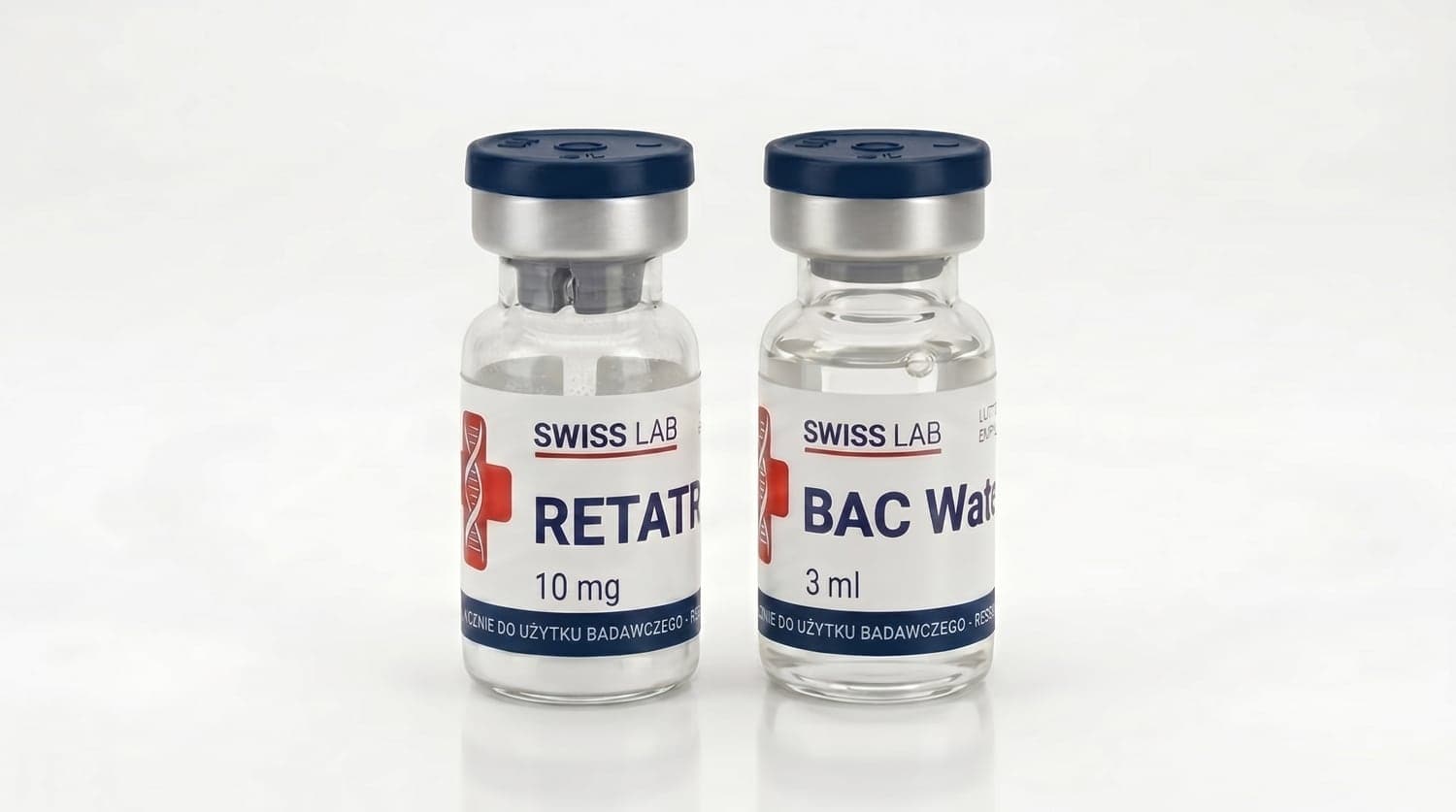
What retatrutide is
Retatrutide is a peptide — a short chain of amino acids (the building blocks of proteins) — produced synthetically in the laboratory.
Its molecule mimics three natural metabolic hormones at once, abbreviated GIP, GLP-1 and glucagon. It is the first compound of its kind acting on all three; earlier ones moved one or two. It remains an investigational compound, not an approved medicine. Results from one trial in people with obesity were published in the NEJM (PubMed).
In the laboratory retatrutide is interesting as a tool for studying what happens when those three switches are pressed simultaneously — until now they were studied mostly separately.
How it works (in short)
An agonist is a molecule that presses the same switch in the body as the natural hormone. Retatrutide presses three at once. Put simply: one relates to the feeling of fullness, the second to insulin secretion and fat handling, and the third (glucagon) to energy expenditure. Adding that third one is what distinguishes retatrutide from compounds acting on only two.
Researchers have even imaged how a single molecule fits all three receptors — described in the paper on the structure of the triple agonist (PMC). A broader overview of this class is in this review article (PMC).
What is being studied
The main research direction is obesity and metabolic disorders. In one trial in people with obesity, substantial changes in body weight were observed over 48 weeks. These are early-stage results, not proof of a finished therapy — they are described in the NEJM trial (PubMed) cited above.
A second area is metabolic-dysfunction-associated fatty liver disease. The effect of retatrutide on liver fat content has been examined — details in the paper on retatrutide and the liver (PMC).
The most frequently reported side effects concerned the stomach and intestines (nausea, vomiting, diarrhoea). Since the compound is still under investigation, its safety and long-term effects need further confirmation.
For in-vitro laboratory research only. Not for human or animal consumption and not for treatment.