
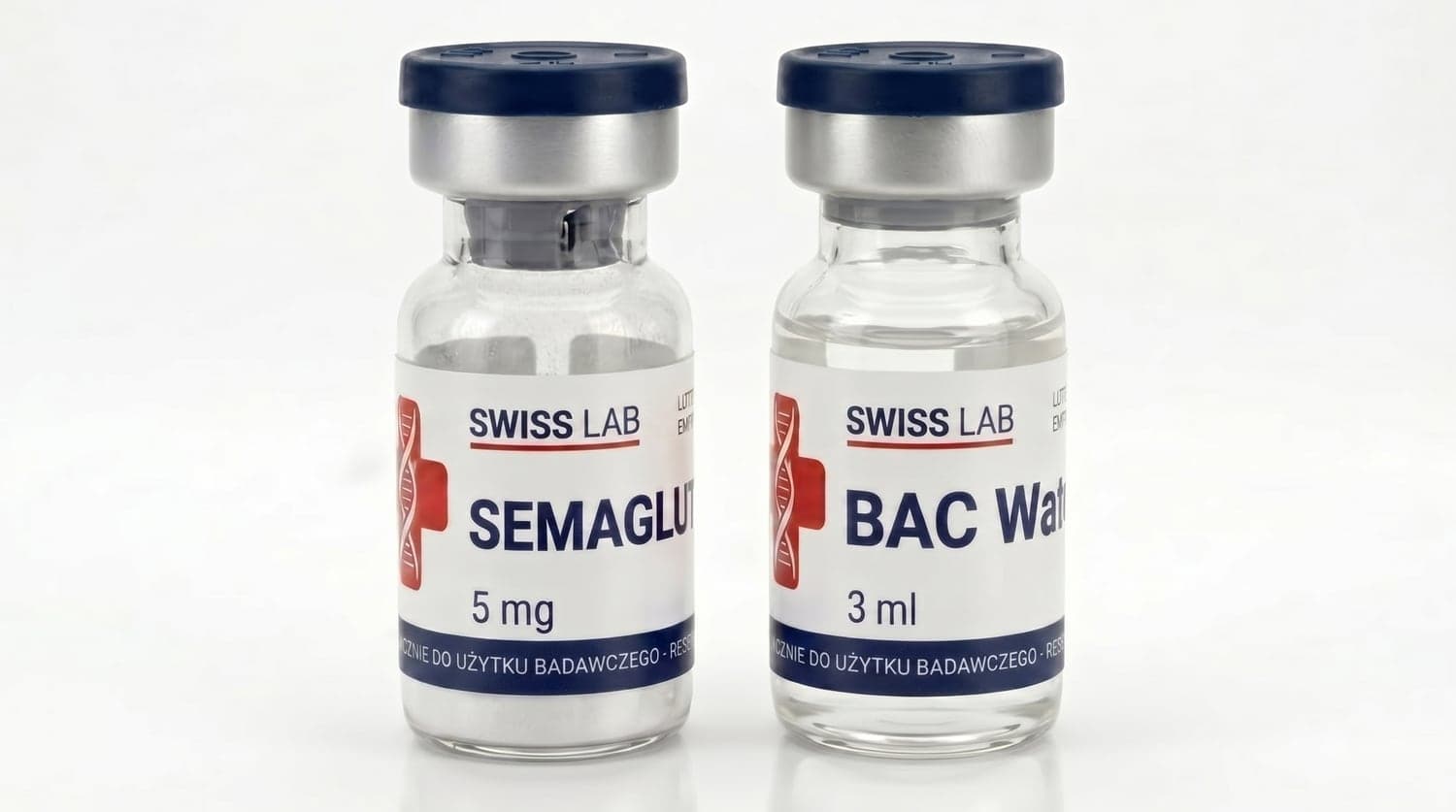
What semaglutide is
Semaglutide is a synthetic molecule that closely mimics the natural gut hormone called GLP-1. That hormone helps the body control blood sugar after a meal.
Natural GLP-1 breaks down in the body within minutes. Semaglutide was modified to last far longer — roughly a week. That makes it a frequent subject of research into long-acting molecules of this type. A description is in the review paper on semaglutide (PMC). In science it also serves as a reference point in work on blood sugar, appetite and body weight.
How it works (in short)
An agonist is a molecule that presses the same switch in the body as the natural hormone. Semaglutide activates the GLP-1 receptor. In pancreatic cells this helps release insulin when sugar is high — so it acts mainly at raised sugar levels. It also reduces the signal telling the liver to produce sugar.
The second part of its action involves the stomach and the brain: semaglutide slows gastric emptying and reduces appetite. These pathways are described in the review on GLP-1-acting molecules (PMC). Because the key effects depend on sugar levels, the risk of sugar falling too low is small.
What is being studied
Semaglutide has been tested in many large trials. In one, in people with overweight or obesity, an average weight reduction of about 15% was observed after 68 weeks, against about 2% in the placebo group (an inactive substance). Details are in the publication on semaglutide and body weight (PubMed).
A second area is the heart and blood vessels. In a trial of more than 3,000 people with type 2 diabetes and high cardiac risk, fewer serious events (such as heart attack or stroke) were recorded in the semaglutide group than in the placebo group. The results are described in the paper on semaglutide and heart health (PubMed).
Beyond sugar and body weight, researchers are studying other possible actions of this class of molecules. It remains an actively developing field.
For in-vitro laboratory research only. Not for human or animal consumption and not for treatment.